Colorado State Patrol Explains E-Bike vs. E-Moto Rules After 8-Year-Old Stopped Riding Electric Motorcycle
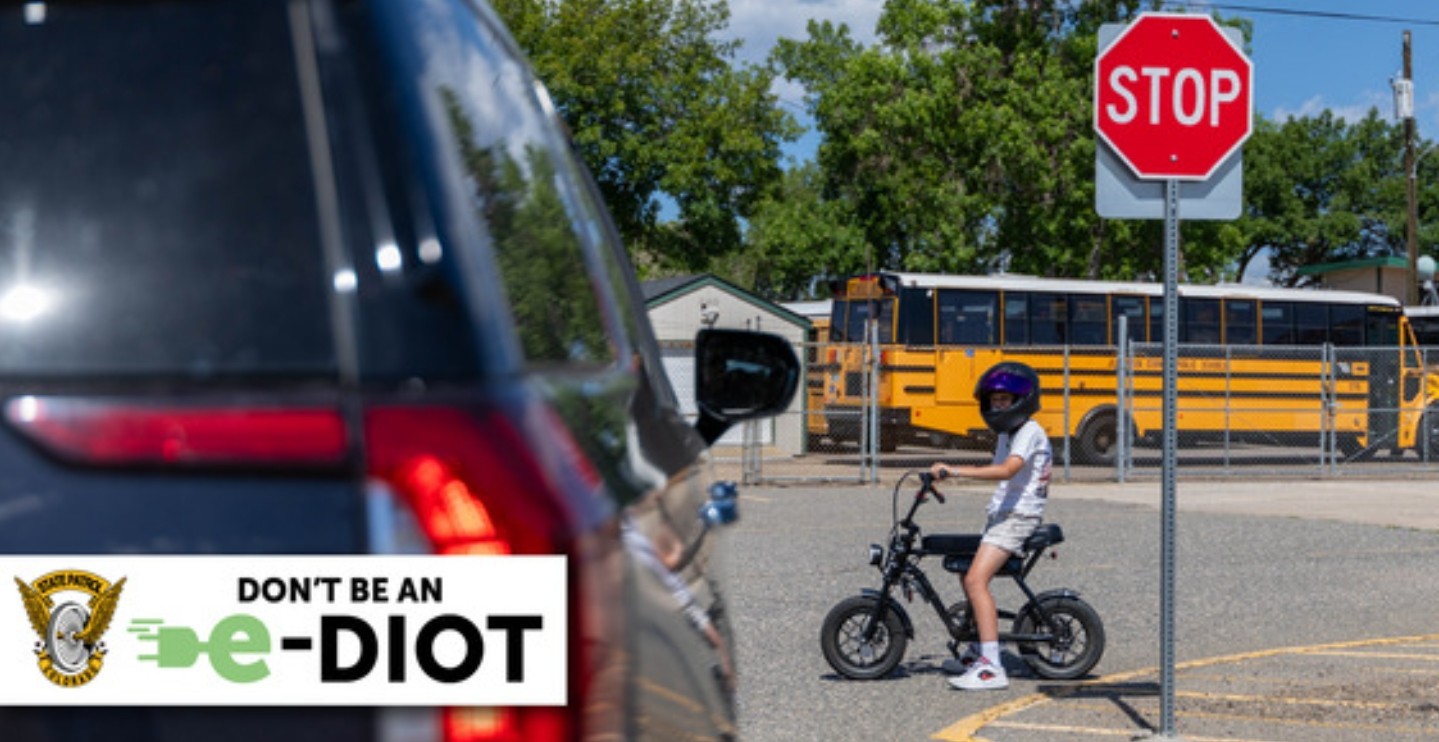
Description: Colorado State Patrol is reminding families about the difference between e-bikes and electric motorcycles after an 8-year-old was stopped riding a 2,000-watt e-moto on a sidewalk in Salida...

**Update** E-Bike vs. E-Moto
(COLO) - On July 2, 2026, at approximately 11:05 a.m., Trooper Nate Alluisi contacted an eight-year-old riding a 2,000-watt electric motorcycle on a sidewalk near Highway 50 in Salida. Trooper Alluisi used the contact as a teaching opportunity to explain that although the motorcycle is electric and quieter than a gas-powered dirt bike, it is still an off-road vehicle and cannot legally be ridden on public streets or sidewalks. The child was able to push the motorcycle a short distance home.
As electric motorcycles, e-bikes and other electric rideables become more popular, the Colorado State Patrol encourages parents and riders to understand how a device is legally classified before taking it onto a public roadway, bike path or sidewalk. A device’s appearance, speed and motor wattage matter, and being electric does not automatically make it a street-legal e-bike. Know the device, know where it can legally be operated, wear a helmet, and make safety the priority on every ride.
###
(COLO) – As parents, grandparents, and kids look to purchase e-bikes, it's been discovered that some retailers have blurred the lines, selling heavy, high-speed electric motorcycles while marketing them as standard e-bikes. Colorado State troopers want buyers to use caution and check the specs before they buy and ride.
“Sometimes what a retailer is calling an ‘e-bike’ is not a bike at all,” stated Col. Mathew C. Packard, chief of the Colorado State Patrol. “Any two-wheeled vehicle that has a motor exceeding 750 watts, speeds exceeding 28 mph, or no functional pedals, may be reclassified as a moped or motorcycle.”
If a rider or caregiver modifies an e-bike to go faster than 28 mph, it would also be considered a moped or motorcycle. The distinction between these devices matters because each type of vehicle has different legal or safety requirements.
Why Distinction Matters
When an e-motorcycle is marketed as an e-bike, the following requirements are bypassed:
Driver’s license or Motorcycle License
Vehicle registration and Insurance
Age Restrictions (e-bikes can be ridden by younger teens, while e-motorcycles require riders to be at least 16)
In addition, these devices have different restrictions on where they can be driven. Class 1 and Class 2 e-bikes are generally allowed wherever traditional bicycles are permitted, including bike trails and natural surface paths. Class 3 e-bikes are typically restricted to roads and designated bike lanes. E-motorcycles are restricted to roads, OHV Trails and forest roads that permit motorized use.
In Colorado, municipalities and local jurisdictions have the right to impose their own localized ordinances and restrictions. Be sure to check the local ordinances for your exact town or city as they can differ from what’s allowed at the state level.
“One of the biggest oversights we are presently seeing is that kids under the age of 16 are riding two-wheeled vehicles that are classified as mopeds or motorcycles,” explained Col. Packard. “In Colorado, you must be at least 16 years old to obtain a full motorcycle endorsement (Class M) on your driver's license. These devices also must be registered and licensed.”
The Colorado State Patrol is raising awareness of the risks and requirements associated with micromobility devices. Riders and caregivers should know the rules and local ordinances of where they ride to ensure they are operating both legally and safely. Don’t be an e-DIOT, be safe, and be seen as a responsible e-device rider.
Follow SECO News on Facebook.
Subscribe to the SECO News YouTube Channel.
The Police Beat Sponsor

.jpg)



.jpg)


.png)

.png)











.png)